
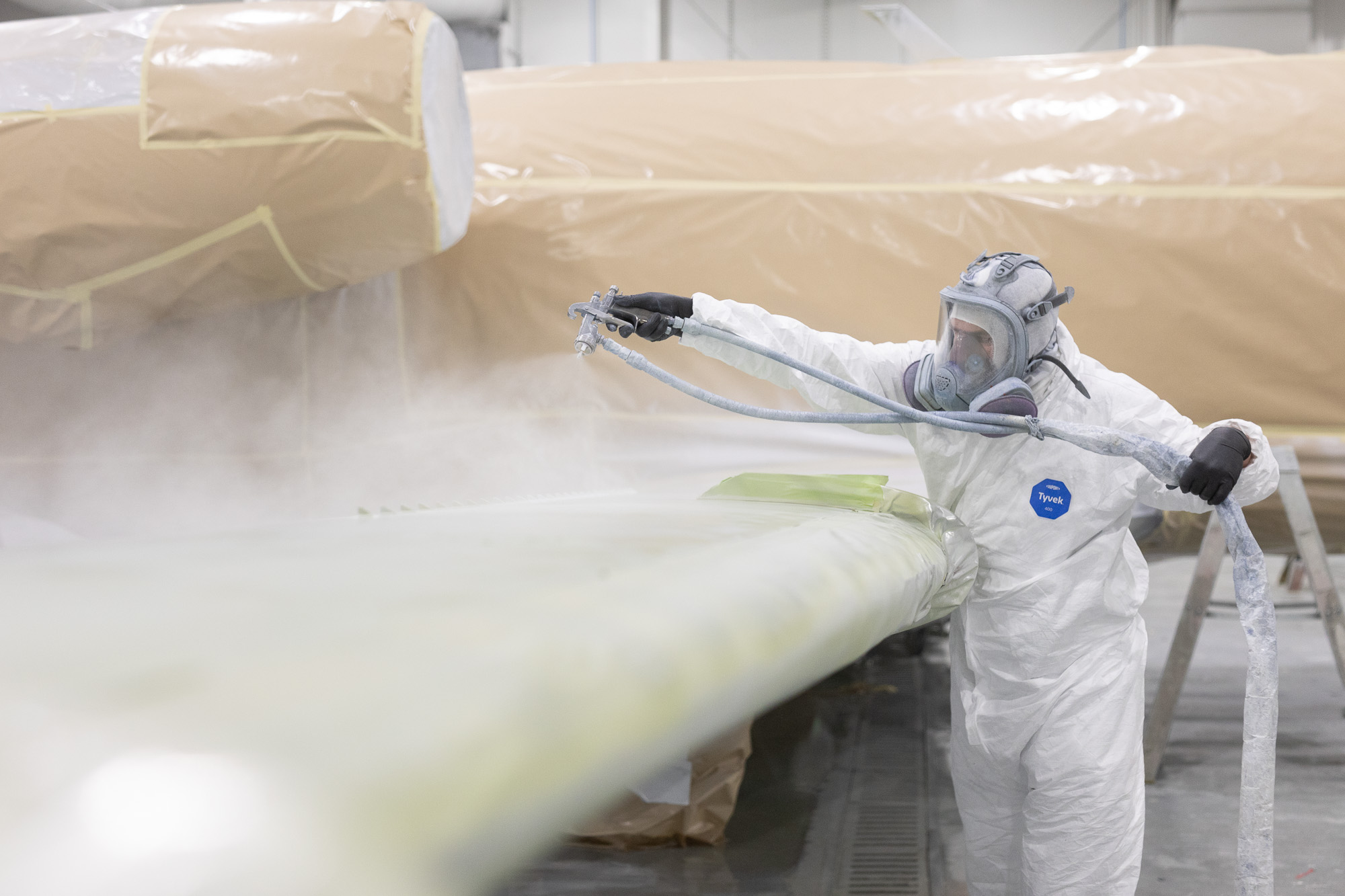
Few things refresh the look and protect the value of an aircraft like a quality paint job. But for many owners, the process raises a lot of questions: How long will my aircraft be down? What actually happens during a repaint? Below, we’ve rounded up the questions we hear most often and broken down what you need to know.
How often should an aircraft be repainted?
Most general aviation aircraft need a repaint every 7 to 10 years, though this varies based on climate, hangar storage, and how the aircraft is used. Coastal aircraft exposed to salt air may need a refresh closer to the 5-year mark, while well-maintained, hangared aircraft can sometimes stretch beyond 10 years. Fading, chalking, peeling, or visible corrosion under the paint are the clearest signs it’s time.
What’s actually included in a paint proposal?
Not all quotes are created equally. A full chemical strip or sand and re-coat estimate should account for the following:
- Corrosion inspection and treatment
- Bodywork and surface repair
- Primer and topcoat materials
- Multi-color/striping work up to 3 stripes
- Main entry door and baggage door frames will be painted
- Gear doors will be painted
- Radome boot will be replaced if applicable
- Hazardous material removal fee is included in the flat rate
Ask your paint shop to itemize these so you know exactly what you’re paying for and what you’re not.
What’s the actual process for painting an aircraft?
While every shop’s workflow varies slightly, a standard repaint generally follows these steps:
- Inspection – Documenting the aircraft’s current condition and identifying problem areas
- Stripping – Removing old paint, typically via chemical stripper, down to bare metal
- Post-strip inspection – Checking for corrosion or structural issues now visible
- Surface repair – Addressing dents, pitting, or corrosion found during inspection
- Pretreatment – Etching and applying a corrosion-inhibiting conversion coating (e.g., Alodine) to aluminum surfaces
- Priming – Applying an epoxy primer for adhesion and corrosion protection
- Masking and base coat – Applying the primary color(s)
- Design layout – Masking and painting stripes, logos, and registration numbers
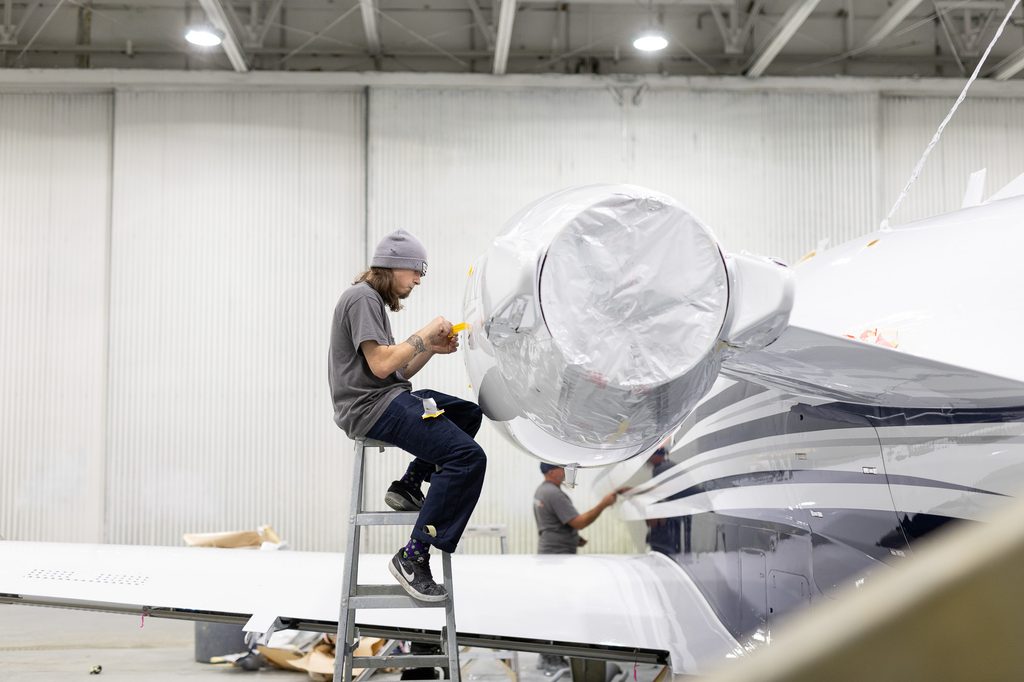
- Final detailing – Removing masking, resealing around windows, and adding required placards
How long will my aircraft be out of service?
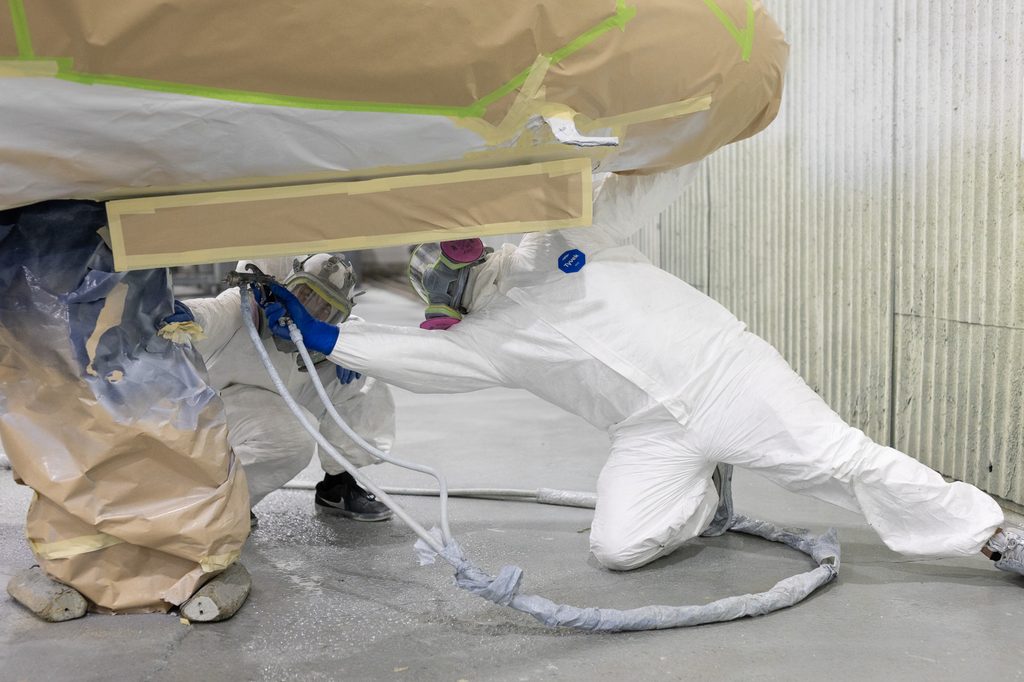
4-5 weeks is standard depending on design complexity and the shop’s schedule. Custom scheme’s may take additional labor for layout and dry time.
Is a weight and balance required for a full paint job?
No, it is not required but offered as an option. Often times the aircraft may actually weight less after a full strip and paint.
What kind of paint is used on aircraft?
Aircraft use specialized aviation coatings, Premier Aviation uses:
- PPG 8800 Topcoat – Premium aerospace polyurethane topcoat delivering exceptional gloss, long-term durability, and outstanding UV and weather resistance for a lasting finish.
- Axalta Imron AF700 – High-performance polyurethane base coat offering vibrant color, excellent coverage, and superior appearance for premium aircraft finishes.
- Axalta Imron AF400 – Durable polyurethane topcoat designed for general aviation, providing excellent gloss, long-lasting protection, and easy application.
- Axalta Imron AF740 – High-solids polyurethane clear coat engineered to enhance gloss, improve durability, and deliver a smooth, premium-quality finish over AF700 base coat.
Can I customize my paint scheme, or design my own?
Absolutely. PremierMRO will supply each customer with a design specialist to begin the paint scheme process. A full color drawing with manufacture paint chips and part numbers will be provided for approval. If an outside engineering firm was used, we can match provided drawings.
How do I choose the right paint shop?
A few questions worth asking before committing:
- Does the shop have an in-house designer to help with scheme development?
- Can they identify and repair corrosion or structural issues, not just paint over them?
- Does their quote include a full chemical strip, or only sanding and re-coating?
- What paint manufacturer and coating system do they use?
- Do they offer a workmanship warranty?
- Can they provide references or examples of past work on similar aircraft?
What should I avoid when choosing colors or finishes?
A few practical considerations:
- Dark colors absorb more UV and heat, which can accelerate fading and add to interior cooling costs
- Metallic finishes look great but typically cost more to maintain and touch up
- White and light colors tend to fade more slowly and make it easier to spot surface damage during inspections
Have more questions about your upcoming paint project? Every aircraft and every owner’s goals are a little different, we’re happy to talk through your specific situation and put together a detailed, itemized quote.
